Explore the history and small-town charm of Chino, CA, from its rancho and dairy roots to downtown, local events, and close-knit neighborhoods.
Some places grow up fast. Chino took its time, and you can still feel it. 🌾
Ask a longtime resident what they love about Chino, and the answer is rarely a single landmark. It’s the way neighbors wave from the driveway, the way Main Street still feels like a place to gather, and the way the city holds onto its past while the Inland Empire changes around it. Here’s a closer look at how Chino became the community it is today.
From Rancho Land to Farm Country
Chino’s story begins with the land. The area was once part of the Rancho Santa Ana del Chino, a Mexican land grant from the early 1840s. Cattle grazed where neighborhoods now sit, and the rancho shaped the region’s identity for decades.
By the late 1800s, agriculture took center stage. Sugar beets became a major crop, and a local sugar factory helped put Chino on the map. Chino was later incorporated as a city in 1910, and farming and dairy life defined the town for much of the 20th century. 🐄
That agricultural heritage is still part of Chino’s character today, from the open space on the city’s edges to the down-to-earth, neighbor-first culture.
Historic Landmarks Worth Knowing
Chino rewards anyone who likes a little history with their weekend plans.
Yorba-Slaughter Adobe: One of the city’s oldest surviving structures, offering a rare look at Chino’s early days.
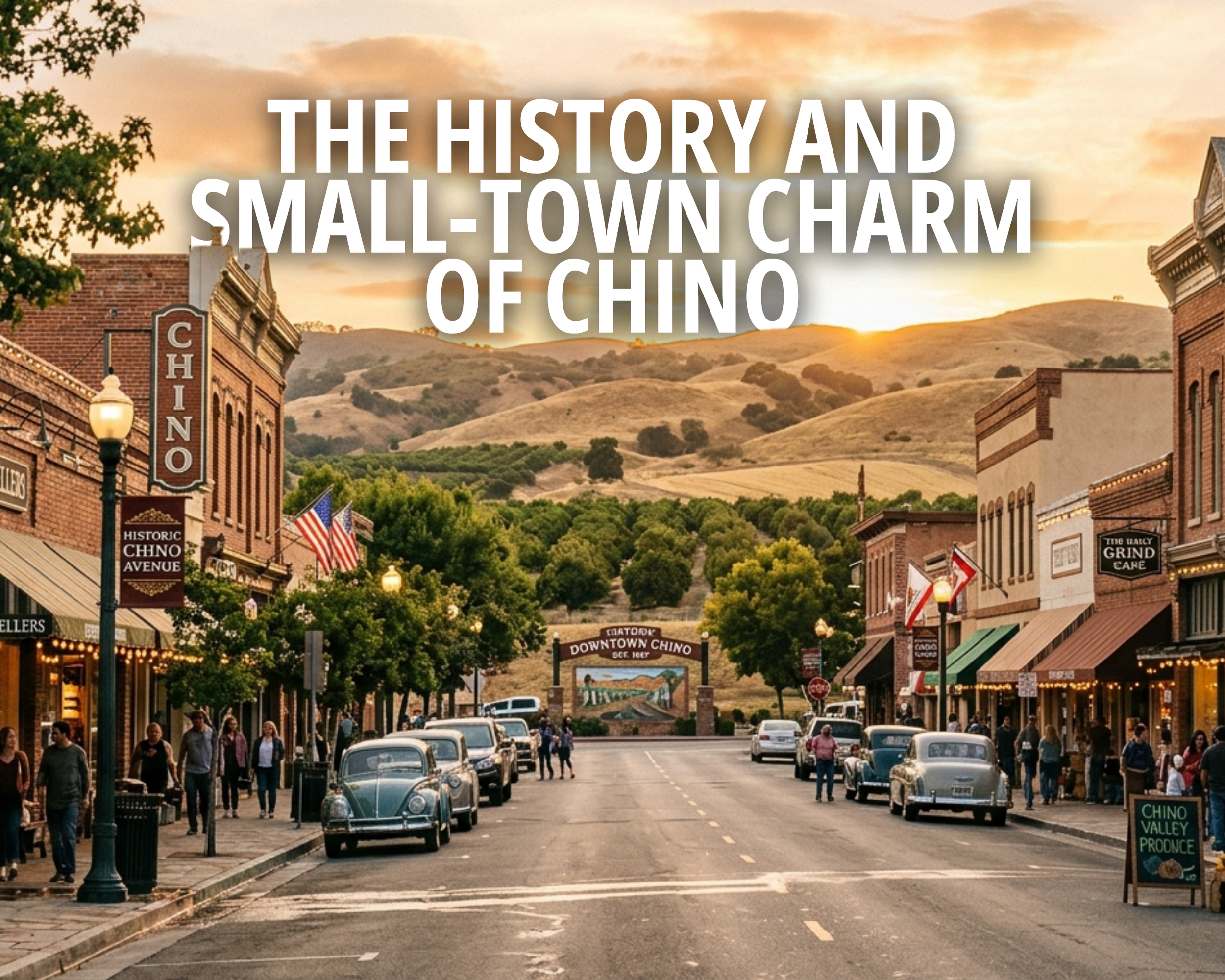
Downtown Chino: Historic buildings, local shops, and a walkable feel that’s hard to find in larger cities.
Planes of Fame Air Museum: A beloved attraction at Chino Airport, with vintage aircraft that draw aviation fans from across Southern California. ✈️
What Small-Town Charm Looks Like Today
Charm is more than old buildings. In Chino, it shows up in everyday moments:
Community events: Seasonal celebrations, farmers markets, and local gatherings bring neighbors together year-round.
Parks and open space: Prado Regional Park and nearby Chino Hills State Park make it easy to get outside without going far. 🌳
Local flavor: Family-owned restaurants, coffee spots, and shops give downtown its personality.
Location: Chino sits comfortably within reach of Orange County, Los Angeles, and the rest of the Inland Empire, so you get the quiet without losing the convenience.
Is Chino a Good Place to Call Home?
For many buyers, Chino strikes a balance that’s hard to find: a close-knit community feel with access to everything the region offers. You’ll find a mix of established neighborhoods, newer developments, and a range of home styles. That makes Chino a fit for first-time buyers, growing families, and anyone ready for a slower pace. 🏡
If you’re curious about living here, the best way to get a feel for it is to spend a Saturday exploring. Walk downtown, grab a bite, and drive through a few neighborhoods. You’ll know quickly whether it feels like home.
Final Thoughts
Chino’s history isn’t tucked away in a museum. It’s in the streets, the landmarks, and the people who’ve built their lives here. The city has grown, but it hasn’t lost the small-town warmth that makes it memorable. Whether you’re thinking about buying, selling, or simply exploring, Chino is a community with real roots and a lot of heart. 💛
Thinking About Chino? Let’s Talk.
At Provident Real Estate, we know the Inland Empire neighborhood by neighborhood. If you’re curious about buying or selling in Chino, or just want to understand what the local market looks like, we’re happy to answer your questions with no pressure.
📞 Call us: 951.444.8020
💻 Visit: providentrealestate.com